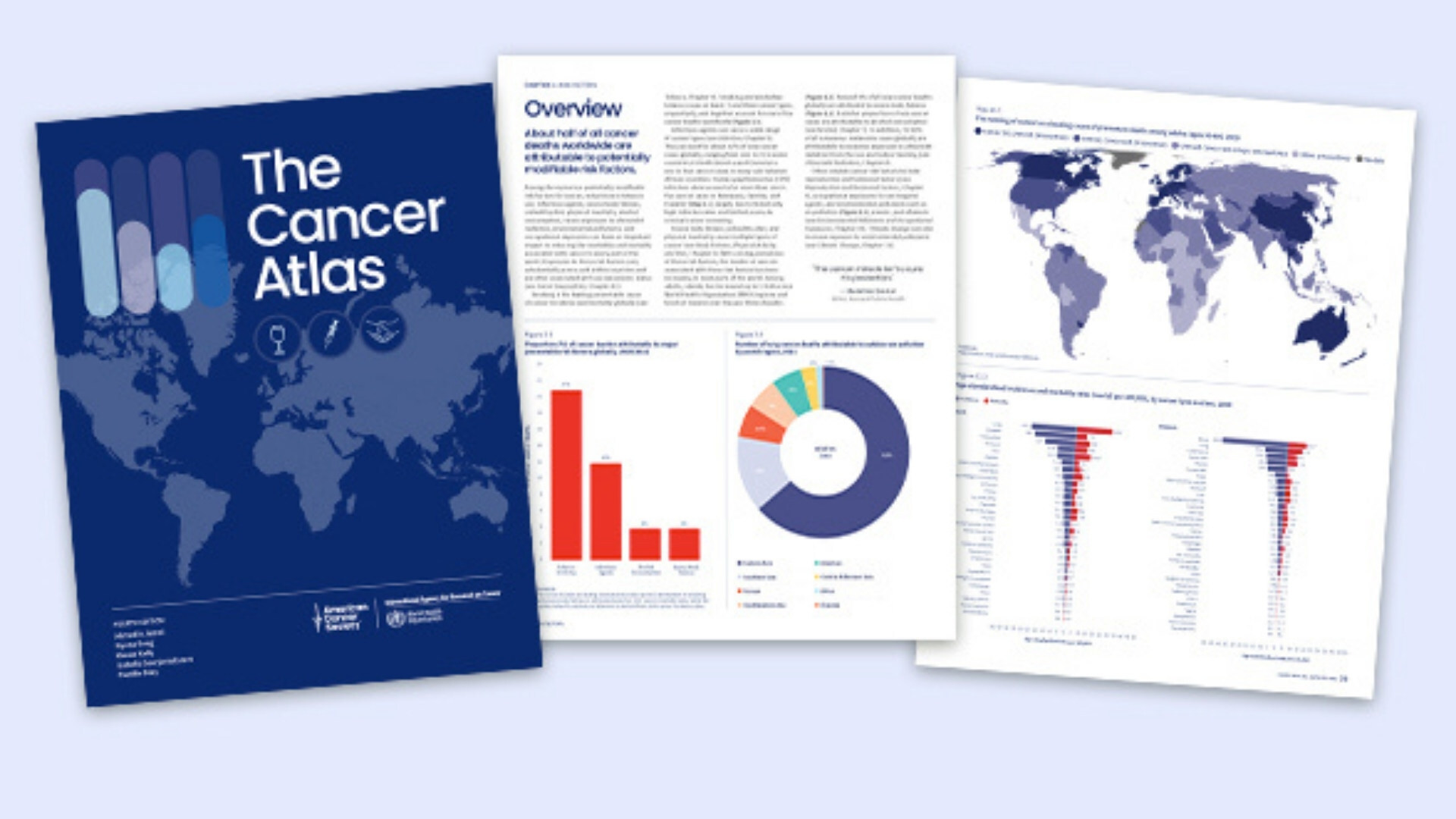
Cancer Atlas, 4th Edition, is a comprehensive guide to cancer burden and profile around the world, and actions to accelerate cancer prevention, control, and equity
LONDON, June 25, 2025 /PRNewswire/ -- The American Cancer Society (ACS) today announced the release of The Cancer Atlas, 4th Edition, a collaborative effort to uncover global cancer patterns and stark inequalities in addressing the burden of the disease. Produced by ACS and the International Agency for Research on Cancer (IARC), The Cancer Atlas reports that an estimated 50% of all cancer deaths worldwide are attributed to modifiable risk factors. These findings will be presented at The Cancer Prevention Research Conference 2025, hosted by ACS and Cancer Research UK (CRUK) in London, June 25-27, 2025.

The Cancer Atlas presents the most up-to-date scientific data and evidence-based consensus across the entire cancer continuum, with contributions to its 47 chapters from more than 70 leading experts and scientists from 35 institutions worldwide. As with previous editions, the 4th edition of The Cancer Atlas is grouped into three sections, namely Risk Factors, The Burden, and Taking Action, with additional chapters to address timely and emerging essential topics, including Alcohol, Climate Change and Cancer, and Health System Resilience.
"This global collaboration to produce the 4th edition of The Cancer Atlas is critical in advancing the American Cancer Society's mission to end cancer as we know it, for everyone," said Dr. Ahmedin Jemal, senior vice president, surveillance & health equity science at the American Cancer Society and lead editor of the report. "A substantial proportion of cancer in each country can be prevented by implementing resource-stratified cancer prevention and control measures, including health promotion, tobacco control, and vaccination; however, such measures are not implemented optimally in many countries because of a lack of political will."
Globally, there are 19 million people diagnosed with cancer and 10 million deaths each year (excluding non-melanoma skin cancer). Without intervention, these numbers could rise to over 33 million cases and 18 million deaths by 2050, solely due to the aging and growth of the population. Lung cancer continues to be the most commonly diagnosed cancer and the leading cause of cancer death worldwide, killing about 1.8 million people every year. Still, over a billion people worldwide use tobacco products due to the incomplete implementation of proven effective tobacco control measures.
"The Cancer Atlas brings attention to some of our most pressing challenges and biggest opportunities to address the global cancer burden," said Dr. William Dahut, chief scientific officer at the American Cancer Society. "Together, we can leverage this research to lessen cancer's footprint on our global community by increasing education, prioritizing screening and prevention, and improving care."
Additional highlights from the report include:
While social inequalities affect all stages of cancer care — from prevention and diagnosis to treatment and palliative care access — cancer burden can be lowered by implementing proven cancer prevention and control strategies that align with available resources, the editor's note. This includes prioritization of public policies for health promotion, tobacco control, vaccination (HBV and HPV), screening, and early diagnosis.
"This 4th edition of The Cancer Atlas underscores the urgent need for global collaboration, data-driven action, and a renewed commitment to prevention," said Dr. Freddie Bray, Head, Cancer Surveillance Branch, International Agency for Research on Cancer and senior editor of the report. "By empowering policymakers, researchers, and communities with the latest insights, we can shape a future where fewer lives are lost to cancer."
The Cancer Atlas is available in print and digital formats. It was designed to ensure user-friendly, accessible, and downloadable descriptions and graphics that can be easily used by cancer-control advocates, government, private, and public health agencies, and policymakers, as well as patients, survivors, and the general public.
Other editors for the 4th edition of The Cancer Atlas include Dr. Hyuna Sung and Kieran Kelly, MPH, from ACS, and Dr. Isabelle Soerjomataram from IARC.
The 2026 Cancer Prevention Research Conference will be held in Atlanta, Georgia.
Additional ACS Resources:
About the American Cancer Society
The American Cancer Society is a leading cancer-fighting organization with a vision to end cancer as we know it, for everyone. For more than 110 years, we have been improving the lives of people with cancer and their families as the only organization combating cancer through advocacy, research, and patient support. We are committed to ensuring everyone has an opportunity to prevent, detect, treat, and survive cancer. To learn more, visit cancer.org or call our 24/7 helpline at 1-800-227-2345. Connect with us on Facebook, X, and Instagram.

SOURCE American Cancer Society